
Introduction to Pharmacognosy
Definition, history and scope of pharmacognosy; classification of crude drugs; sources and cultivation of medicinal plants; introduction to primary and secondary plant metabolites.
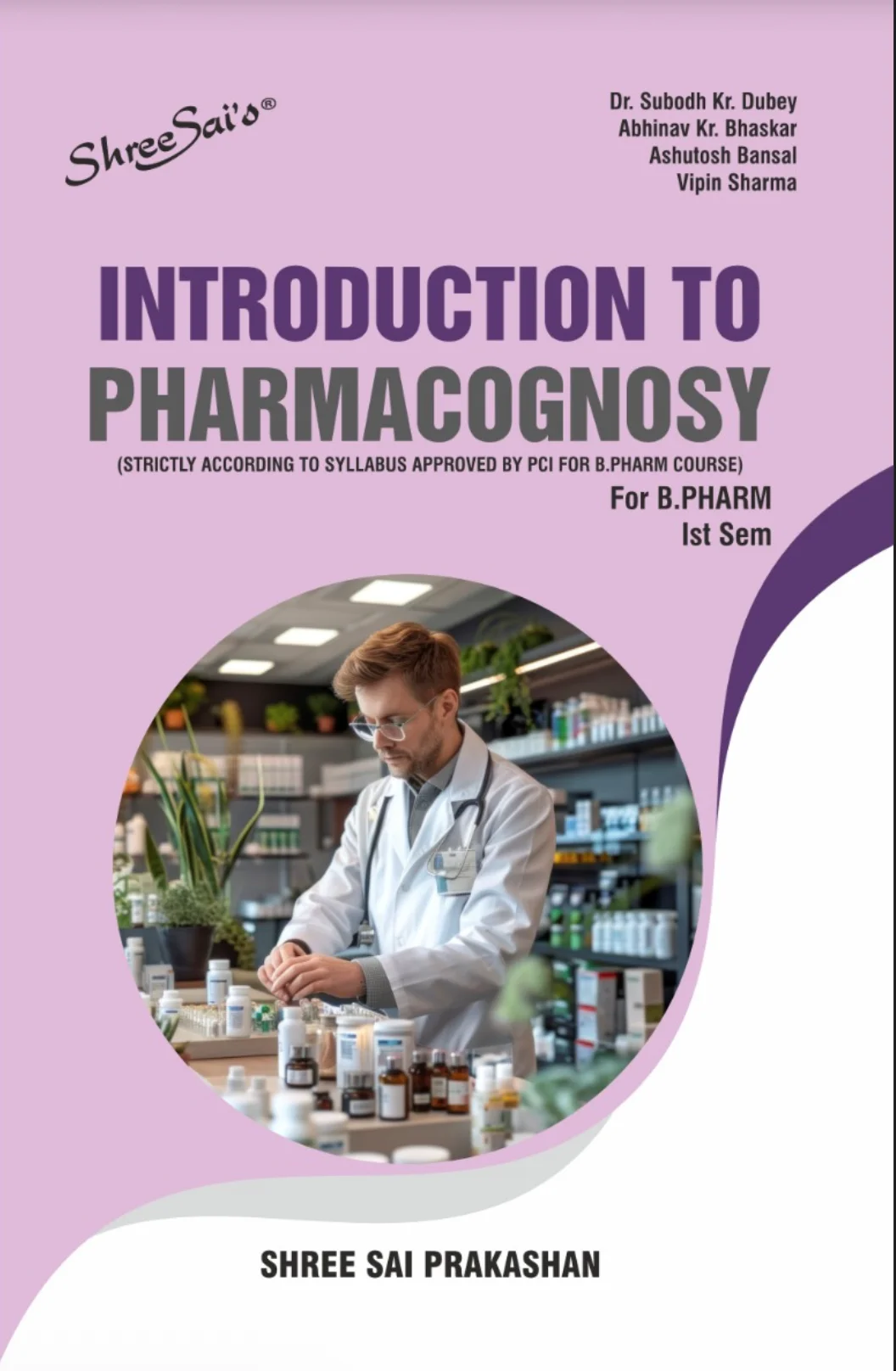
Introduction to Pharmacognosy
The full NEP 2020 book from Shree Sai Prakashan — see full details, ISBN and syllabus coverage on the book page and buy there, or read Unit 1 free first.
Course contents — unit by unit · PCI NEP 2020 BP105T
Unit 1 · Fundamentals of Pharmacognosy 10 hrs
Definition, history, scope and development of pharmacognosy; sources of drugs (plant, animal, microbial, marine, mineral and tissue culture); milestones in drug discovery (morphine, quinine, aspirin, penicillin, taxol, artemisinin); herbal pharmacopoeias; and the classification of crude drugs (alphabetical, morphological, taxonomical, chemical, pharmacological and chemotaxonomic).
Unit 2 · Cultivation, Collection, Processing & Storage 8 hrs
Methods of cultivation and Good Agricultural and Collection Practices (WHO / GAP / GCP); factors influencing cultivation, collection and storage; plant hormones, polyploidy, mutation and hybridization; and ex-situ and in-situ conservation and eco-pharmacognosy for endangered medicinal plants.
Unit 3 · Quality Control of Drugs of Natural Origin 8 hrs
Adulteration and the evaluation of crude drugs by organoleptic, microscopic, physical, chemical and biological methods; physicochemical parameters (extractive values, moisture, ash values, bitterness, foaming and swelling index, optical rotation, acid and saponification value); and DNA barcoding.
Unit 4 · Plant Metabolites & Traditional Systems of Medicine 12 hrs
Primary and secondary plant metabolites — carbohydrates, proteins, lipids, alkaloids, glycosides, flavonoids, tannins, terpenoids, volatile oils and resins; and the basic principles, dosage forms and role of the AYUSH and TCM traditional systems of medicine.
Unit 5 · Phyto-therapeutic Agents 7 hrs
Biological source, constituents and uses of major herbal drug classes — adaptogens (Ashwagandha, Tulsi), hepatoprotectives (Milk thistle, Kutki), cardiovascular drugs (Garlic, Arjuna), antidiabetics (Gymnema, Fenugreek), anti-inflammatories (Turmeric, Boswellia), and CNS, antimicrobial and other agents.
← Full B.Pharm First Year syllabus All 8 semesters — B.Pharm NEP 2020 syllabus →
Adopting the new NEP 2020 B.Pharm syllabus?
Pre-book new-syllabus B.Pharm sets at institutional pricing.