← Exam guides Exam guide

GATE Data Science & AI (DA) — which book for which section

GATE Data Science & Artificial Intelligence (DA), introduced in 2024 and conducted by the IITs, is the national entrance test for M.Tech / MS admission, PSU recruitment and doctoral fellowships in data science and AI. The paper is General Aptitude (common to every GATE paper) plus the DA subject, organised into seven sections.

This guide takes the official GATE DA syllabus section by section and maps each to the Shree Sai Prakashan RGPV AI & Data Science titles that cover it — so you can see exactly which book to open for the mathematical foundation. Where a section is a computer-science subject outside our range, we say so plainly.

Our RGPV AI & Data Science titles were written for the mathematical core of GATE DA: they fully cover Probability & Statistics, Linear Algebra and Calculus & Optimization, plus the graph-theory and logic portions of the DSA and AI sections. The programming, database, machine-learning-methods and AI-search topics are computer-science subjects and need dedicated prep.

How the paper is structured

GATE DA has two components. The seven sections below make up the subject paper.

General Aptitude
Common to every GATE paper — 15 marks (verbal & quantitative aptitude). Not DA-specific.
Data Science & AI (subject)
The seven sections below — 85 marks. The full paper is 65 questions / 100 marks in 3 hours (MCQ, MSQ and numerical-answer types).

The syllabus, section by section — mapped to our books

Each section below links to a full page with the complete topic list and the books that cover it.

Section 1

Probability and Statistics

The largest maths section — and the one our data-science statistics titles were written for.

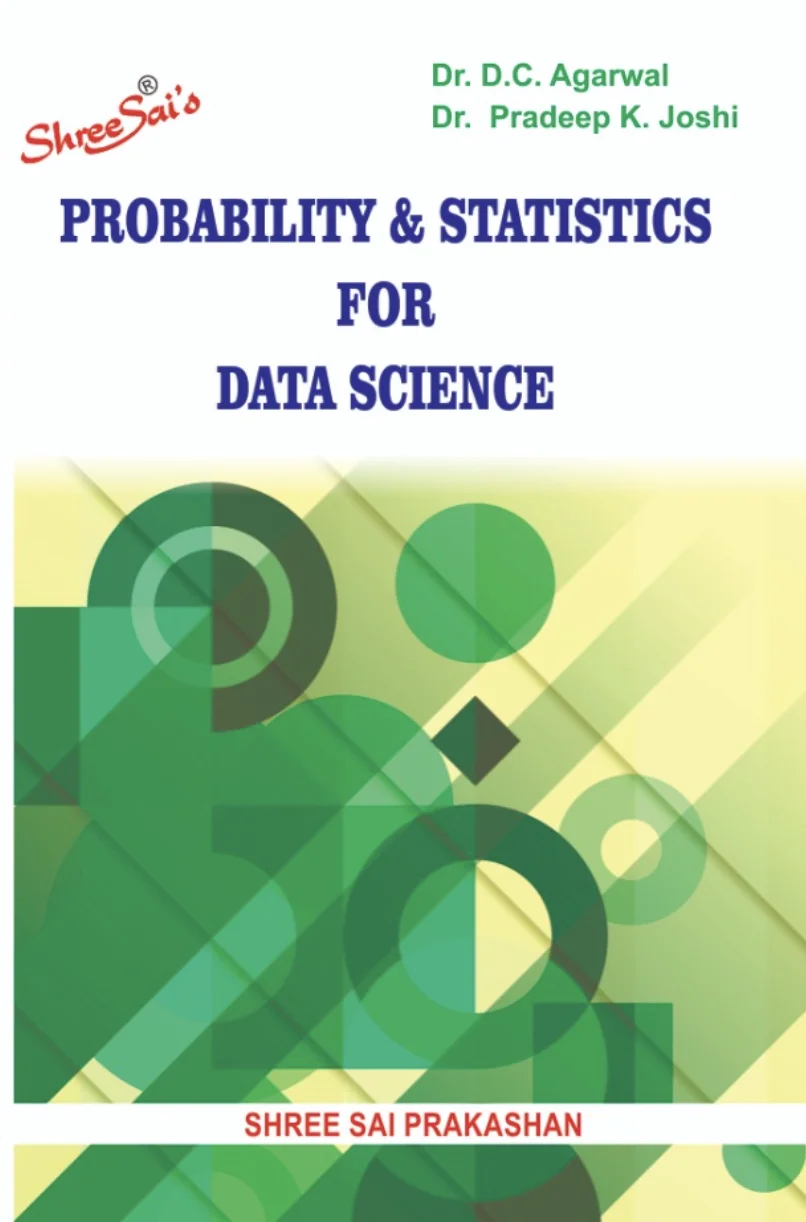
Probability & Statistics for Data Science cover
Probability & Statistics for Data Science
Covers: Most of the section — Bayes theorem and conditional probability, moment generating functions, the binomial, Poisson and normal distributions, correlation and regression, and hypothesis testing with the t-, F-, chi-square and z-tests.
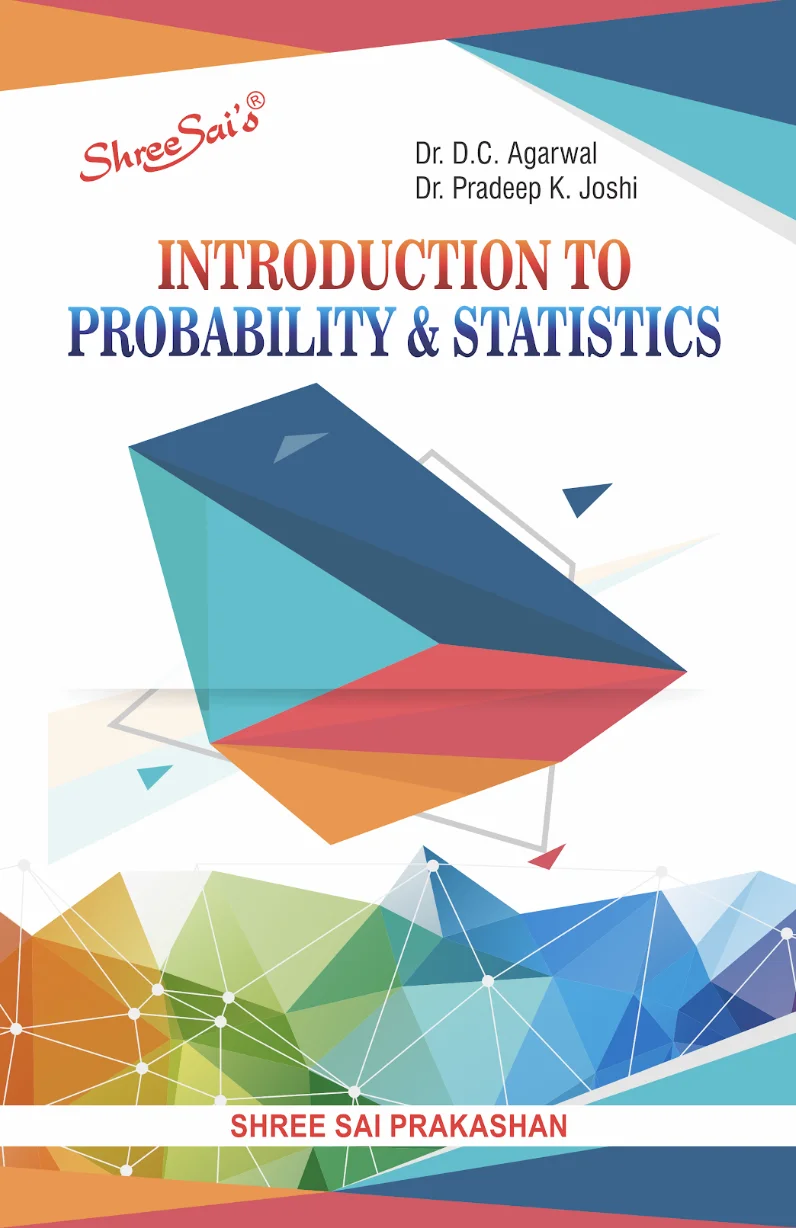
Introduction to Probability & Statistics cover
Introduction to Probability & Statistics
Covers: Probability spaces and conditional probability, Bernoulli trials and Chebyshev’s inequality, the normal, exponential and gamma densities, Bayes’ rule, and the large- and small-sample significance tests (t, chi-square).
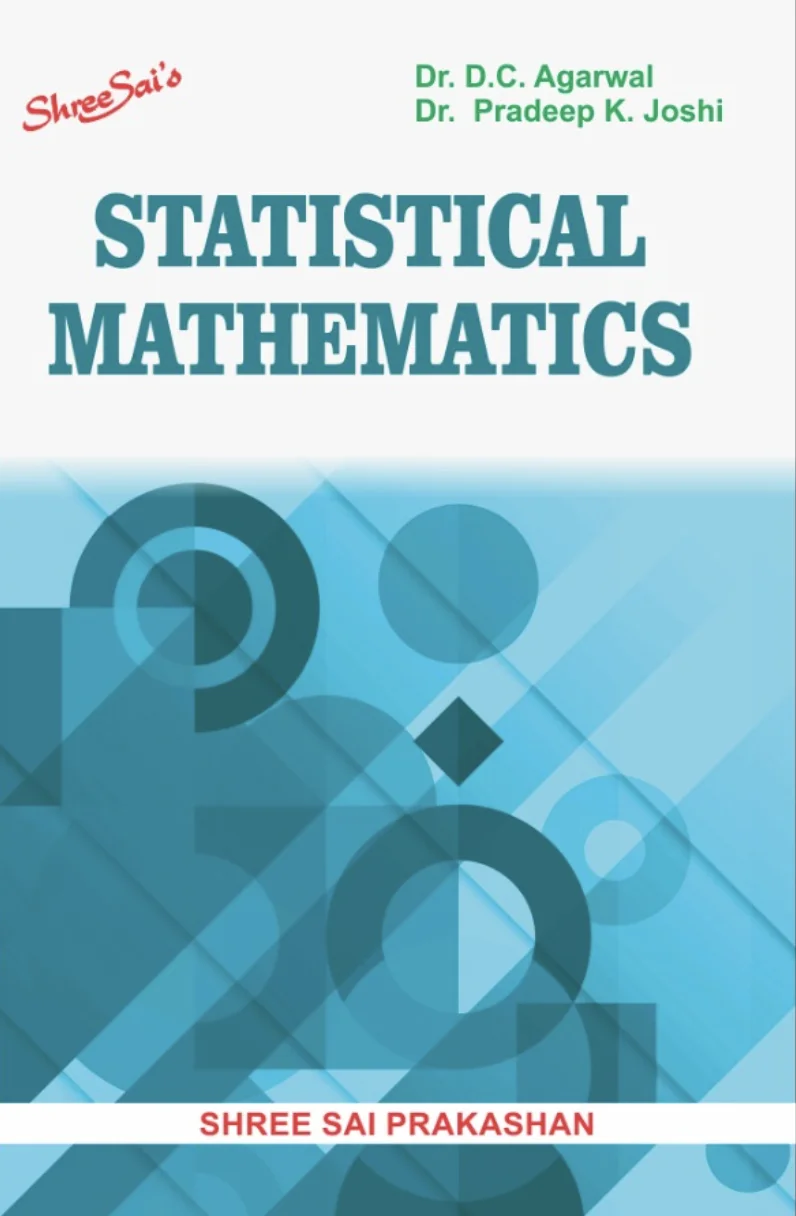
Statistical Mathematics (MCA) cover
Statistical Mathematics (MCA)
Covers: Probability axioms and conditional probability, PMF/PDF and the binomial, Poisson and normal distributions, and testing of hypotheses with the t-, chi-square and F-distributions.
See Section 1 in full
Section 2

Linear Algebra

Vector spaces, eigenvalues and the matrix decompositions used in data science — directly covered.

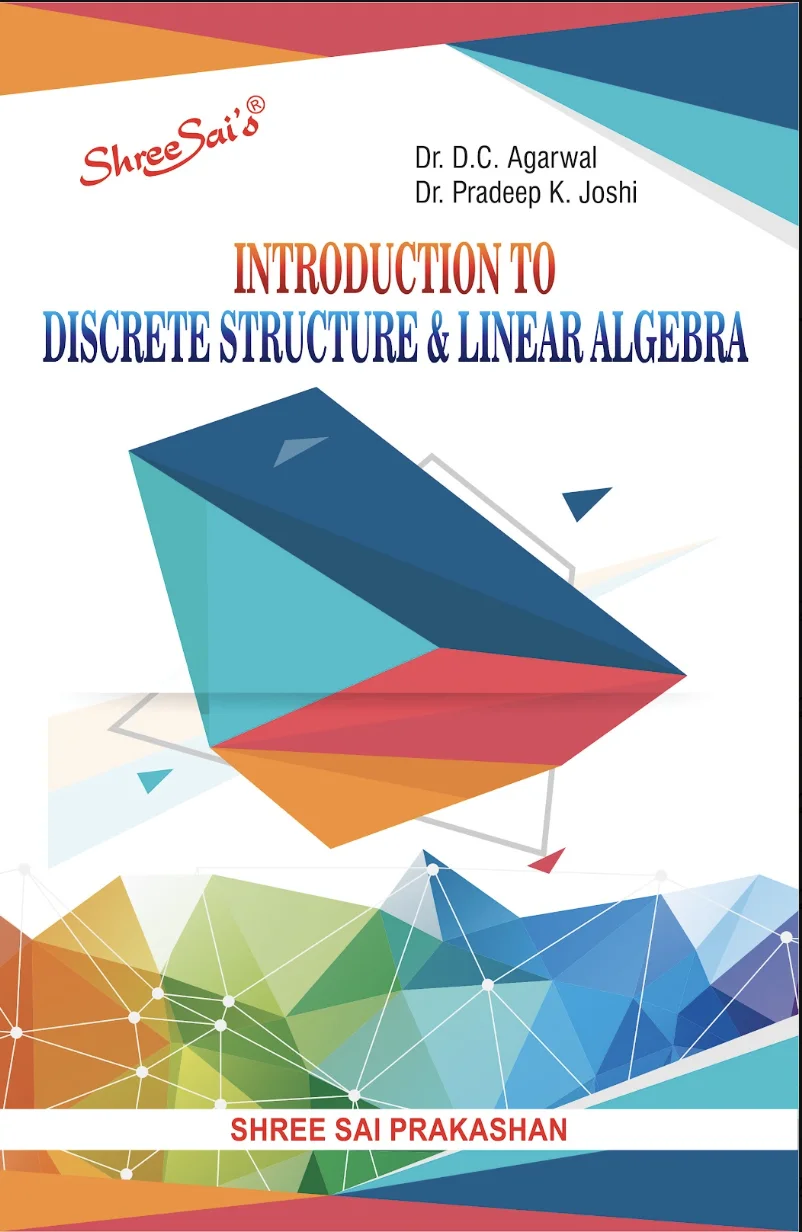
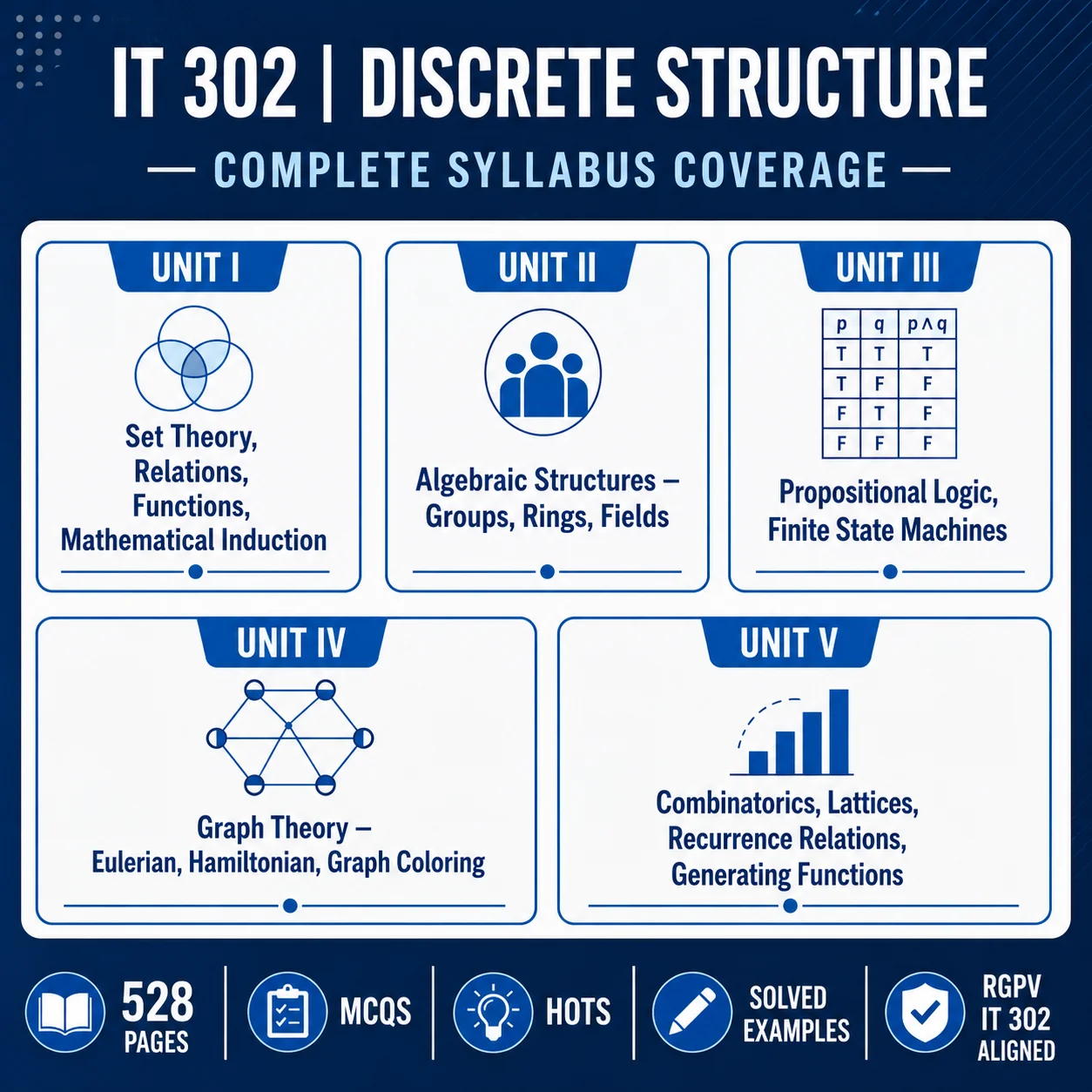
Introduction to Discrete Structure & Linear Algebra cover
Introduction to Discrete Structure & Linear Algebra
Covers: The AI-oriented linear algebra of this section — determinant and trace, eigenvalue decomposition and singular value decomposition (SVD), and vector-space structure.
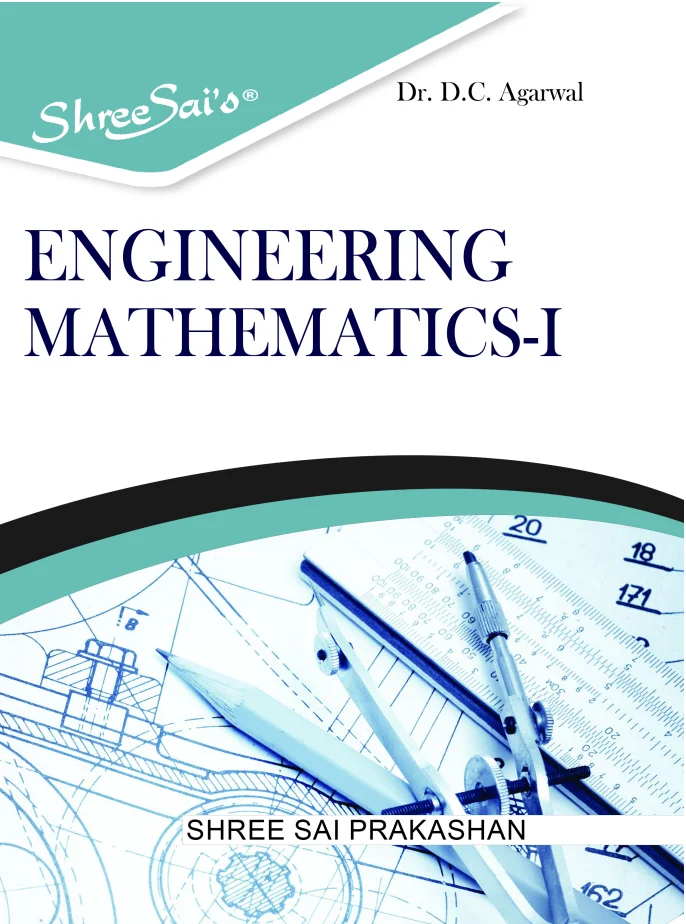
Engineering Mathematics-I cover
Engineering Mathematics-I
Covers: Vector spaces, basis and linear independence, and matrices — rank, eigenvalues and eigenvectors, diagonalisation and the Cayley-Hamilton theorem.
Statistical Mathematics (MCA) cover
Statistical Mathematics (MCA)
Covers: Matrices and eigenvalue problems — rank, systems of linear equations, eigenvalues and eigenvectors, Cayley-Hamilton and the matrix inverse.
See Section 2 in full
Section 3

Calculus and Optimization

Single-variable calculus and its optimization — directly covered.

Engineering Mathematics-I cover
Engineering Mathematics-I
Covers: Single-variable calculus — limits, continuity and differentiability, the mean-value and Taylor/Maclaurin theorems, and maxima and minima.
Statistical Mathematics (MCA) cover
Statistical Mathematics (MCA)
Covers: Limits and continuity, the mean-value theorems and L’Hospital’s rule, and maxima and minima.
See Section 3 in full
Section 4

Programming, Data Structures and Algorithms

A CS section — only its graph-theory portion overlaps our Discrete Structure titles.

Discrete Structure cover
Discrete Structure
Covers: The introduction to graph theory — planar and weighted graphs, paths and cycles, Eulerian and Hamiltonian circuits and graph colouring.
Introduction to Discrete Structure & Linear Algebra cover
Introduction to Discrete Structure & Linear Algebra
Covers: The graph-theory portion — paths, cycles, shortest path and graph colouring.
Not in our range yet — Programming in Python, the core data structures (stacks, queues, linked lists, trees, hash tables) and the searching/sorting and divide-and-conquer algorithms — CS programming topics outside our mathematics range.
See Section 4 in full
Section 5

Database Management and Warehousing

A computer-science subject — outside our mathematics range.

Not in our range yet — The entire Database Management and Warehousing section (ER and relational models, SQL, normalization, indexing and data-warehouse modelling) — a computer-science subject outside our range.
See Section 5 in full
Section 6

Machine Learning

The ML methods are a dedicated subject; their maths foundations sit in Sections 1 and 2.

Not in our range yet — The machine-learning methods themselves — regression/classification models, SVM, decision trees, neural networks and clustering. Their mathematical foundations (regression and correlation in Section 1; PCA via the SVD / eigen-decomposition in Section 2) are in our books, but the ML methods are a dedicated subject.
See Section 6 in full
Section 7

AI

Only the logic portion overlaps our Discrete Structure titles; search and probabilistic reasoning do not.

Discrete Structure cover
Discrete Structure
Covers: The logic portion — propositional and first-order (predicate) logic, truth tables, normal forms and quantifiers.
Introduction to Discrete Structure & Linear Algebra cover
Introduction to Discrete Structure & Linear Algebra
Covers: First-order logic, truth tables and normal forms.
Not in our range yet — AI search (informed, uninformed and adversarial) and reasoning under uncertainty / probabilistic inference — outside our mathematics range.
See Section 7 in full

Also in our engineering mathematics series

The rest of the RGPV B.Tech engineering-mathematics series — foundational maths a DA aspirant also studies, though these titles cover engineering topics (differential equations, complex variables, numerical methods and transforms) outside the DA syllabus.

Frequently asked

Which books do I need for GATE DA (Data Science & AI)?
GATE DA has seven subject sections. Our RGPV AI & Data Science range covers the mathematical core: Probability & Statistics (Sec 1), Linear Algebra (Sec 2) and Calculus & Optimization (Sec 3), plus the graph-theory part of Sec 4 and the logic part of Sec 7. The Database (Sec 5), Machine-Learning-methods (Sec 6) and the programming and AI-search topics are computer-science subjects that need a dedicated title.
Do your books cover the machine-learning section of GATE DA?
Not the ML methods themselves (SVM, decision trees, neural networks, clustering). But their mathematical foundations do sit in our range — regression and correlation in the Probability & Statistics book, and PCA through the SVD and eigen-decomposition in the Linear Algebra title. Pair them with a dedicated ML resource for the methods.
Are these the RGPV AI & Data Science books?
Yes — the same syllabus-aligned RGPV B.Tech AI & Data Science mathematics titles (Probability & Statistics for Data Science, Introduction to Probability & Statistics, Discrete Structure & Linear Algebra, and the engineering-mathematics series). They map onto the maths sections of GATE DA, which is why they double as GATE DA foundation books.
Does GATE DA have a General Aptitude section?
Yes. General Aptitude is common to every GATE paper (15 marks). The seven Data Science & AI sections above make up the 85-mark subject paper; the full test is 65 questions / 100 marks in 3 hours.